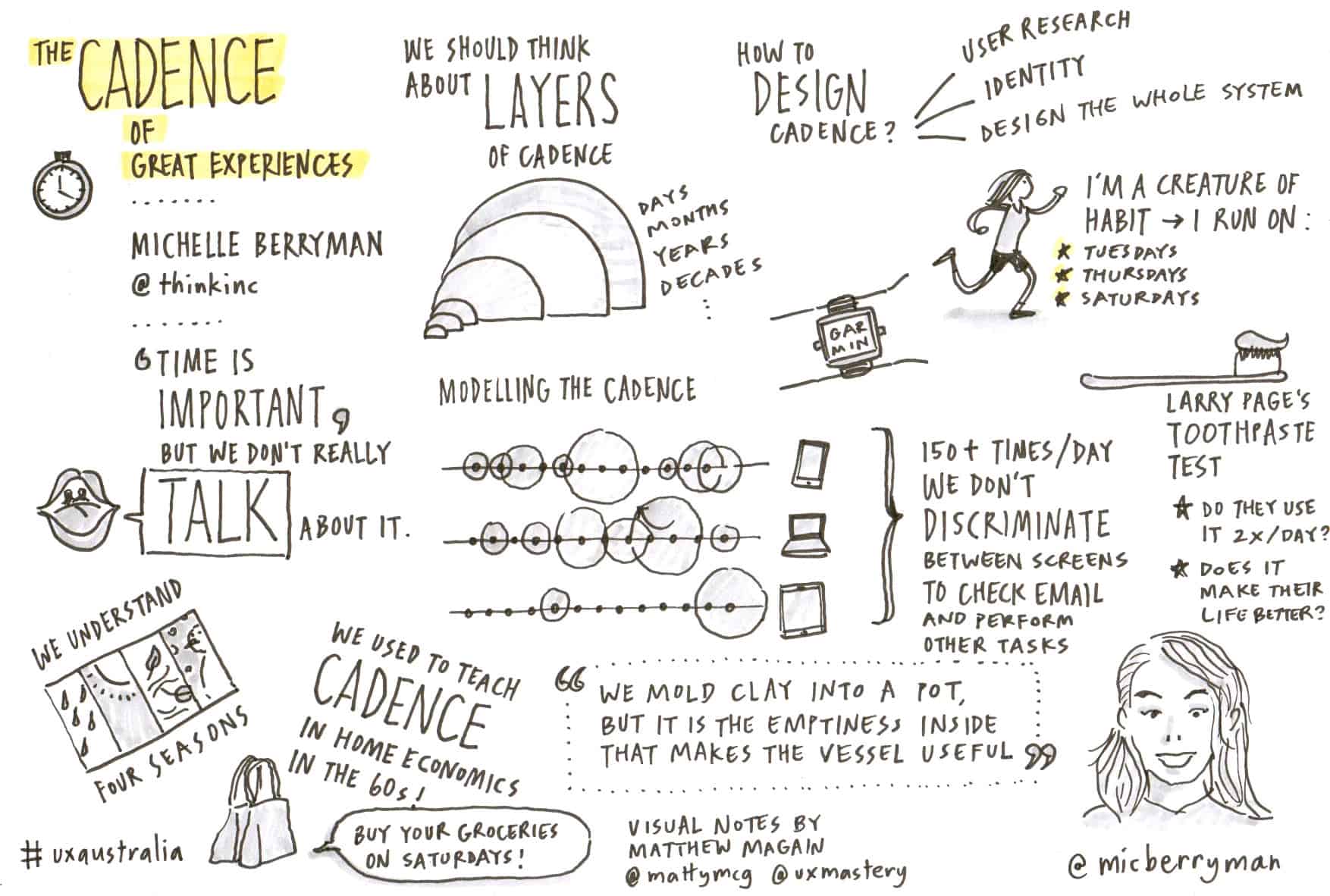
Exploring the cadence of great experiences
Today’s digital experiences are splintered between devices, channels, contexts and need-states along a customer journey. And while our mental model of the customer journey may be seamless, it’s important to remember the digital experiences we design are not fluid and continuous, but rather discrete events that unfold over time and happen with a certain cadence and intensity.
These discrete moments dispersed across spans of time are all important considerations when we think about ‘where’ a user engages with our experience, ‘why’ they engage and ‘how’ they engage. Therefore, designing great experiences requires making decisions about the devices and channels, with equal consideration for the frequency and duration of those experiences. Sometimes, a successful digital experience has only one or two interactions per year. Other engagements call for interactions multiple times per week or multiple times per day.
Our challenge as interaction designers, strategists and marketers is to better understand timescales and cadence. And then use that understanding to:
- Align the business, marketing and brand goals with each channel, customer need-state and context.
- Study the customer journey, in terms of overall timescales and expectations at each touch point.
- Identify the influence that cadence has on digital touch points. There are pre-, during and post-interaction elements of cadence, as well as design attributes across viewports, channels and contexts.
This talk is about how to strategically deliver experiences in the variety of cadences needed to address the match between business goals and customer needs – and across the right channels and devices. It will introduce a framework that attendees can apply to websites, apps, social media, and digital CRM throughout the ecosystems they create, support and improve.